Stop Scrolling. Start Writing: The Local-Paper Letter That Puts Your Rep on Notice
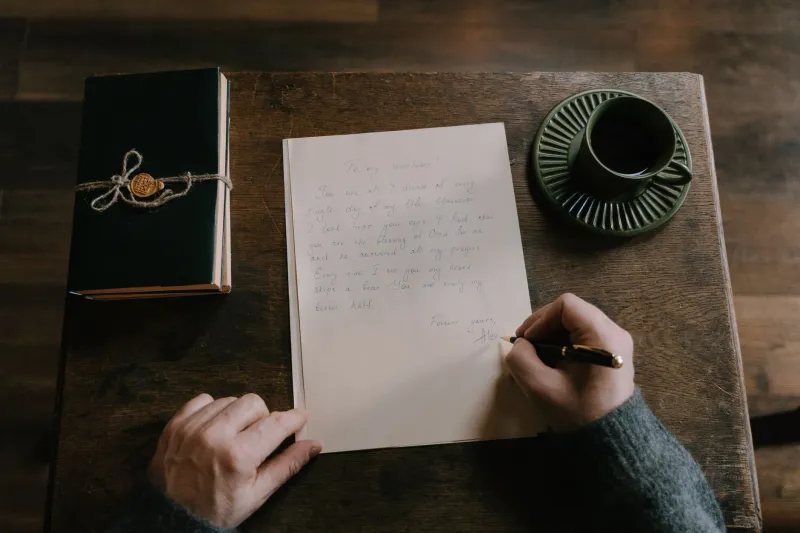
You have signed the petition. You have called the office. You have even showed up to a town hall with a sign that was probably too big for the room. Good. Now do the thing that makes staffers sit up straight: write a letter to the editor of your local paper.
Not an op-ed. Not a tweetstorm. A tight, 300-word letter that names your member of Congress, cites a local fact, and asks for a specific action. That is it. That is the whole weapon.
In 2026, the loudest online take can vanish in an hour. A letter in the Tuesday paper sits on the kitchen table. It gets clipped. It gets forwarded. It gets logged by the district office. That is the difference between noise and pressure.
Why local ink still moves Washington
Congressional offices are not mysterious. They are pressure-processing machines. District staff read the local paper because local papers tell them what constituents are actually angry about. A petition is a number. A published letter with your name and hometown is a person. Staffers clip letters. They flag them for the member. They add them to the pile labeled real people back home.
This is not about being polite. It is about being precise. A sharp letter can land on your representative's radar faster than a 10,000-signature online petition, because it comes with geography and a demand. The paper does the verification for you. Your address proves you are a constituent. Your words prove you are paying attention.
The anatomy of a letter that gets read and clipped
Four moves. Do not get fancy.
1. Hook them in the first sentence. No throat-clearing. No I am writing to you today. Start with the stake. Example: My insulin costs $340 a month, and the bill stuck in committee would cap it at $35. Rep. Smith has not signed on. That is a hook. It has a number, a policy, and a named official.
2. Drop one district-specific data point. Not a national statistic. A local one. The county health department said 1,200 residents lost coverage. The school board cut four nursing positions. The local food bank served 800 more families this fall than last fall. One number. One source. That is enough.
3. Make a clear demand. Vote yes on the bill. Co-sponsor H.R. ____. Sign the discharge petition. Hold a town hall in the district before Thanksgiving. Do not ask them to keep listening. Ask them to do a specific thing by a specific date.
4. Close with a call to action for other readers. Tell people to call the office. Give the phone number. Invite them to the next event. Make it easy for the next person to apply pressure.
Steal this template
To the editor:
[One-sentence hook with a local stake.] I live in [town], and [local fact with a number and source]. Rep. [Name] has not [specific action: co-sponsored H.R. ____ / endorsed the bill / scheduled a town hall].
[One sentence on why this matters here: clinic closures, rent, school funding, etc.] [One sentence with a local quote or stat from the county health department, school board, or local paper.]
I am asking Rep. [Name] to [clear demand] by [date]. No more listening sessions without a vote. No more statements without a co-sponsorship.
Readers: call [office phone] and say [specific ask]. Then write your own letter. We are not going away.
[Name] [Address] [Phone]
Cut it to the paper's word limit. If they say 200 words, keep the hook, the local number, and the demand. Lose the rest.
Timing is part of the strategy
Submit Sunday night or Monday morning. Most weeklies and small dailies build opinion pages early in the week. If a vote is scheduled for Thursday, get your letter in by Tuesday at noon. If your member is home for recess, time it to the first day of the recess. If the paper has an online form, use it and then email the opinion editor directly with the same letter pasted in the body. Never attach a PDF. Editors are busy.
One more trick: if your letter does not run within a week, send a shorter version to a second local outlet. A weekly. A neighborhood paper. A Spanish-language paper. A college paper. The goal is not one clip. The goal is a pattern that staffers cannot ignore.
Turn the ink into follow-through
When the letter runs, do not stop. Clip it. Mail a copy to the district office with a handwritten note asking for a response. Post it on social media and tag the member. Call the office and say, I had a letter in the [paper] on [date] and I want to know where the member stands. Ask for the staffer who handles the issue. Get their email. Send the clip again.
Then show up. Bring the clipping to the next town hall. Hand it to the staffer at the door. Ask your question with the letter in your hand. That is how a 300-word letter becomes a 12-month campaign.
Your move
Do not wait for the perfect draft. Pick one local paper. Write 300 words. Name the member. Name the demand. Submit it before Friday. QPS Action Now has a one-page worksheet with the template above and a list of district office phone numbers. Download it. Use it. Then send us a copy of your letter so we can track the pressure.
The opinion page is not a diary. It is a lever. Pull it.